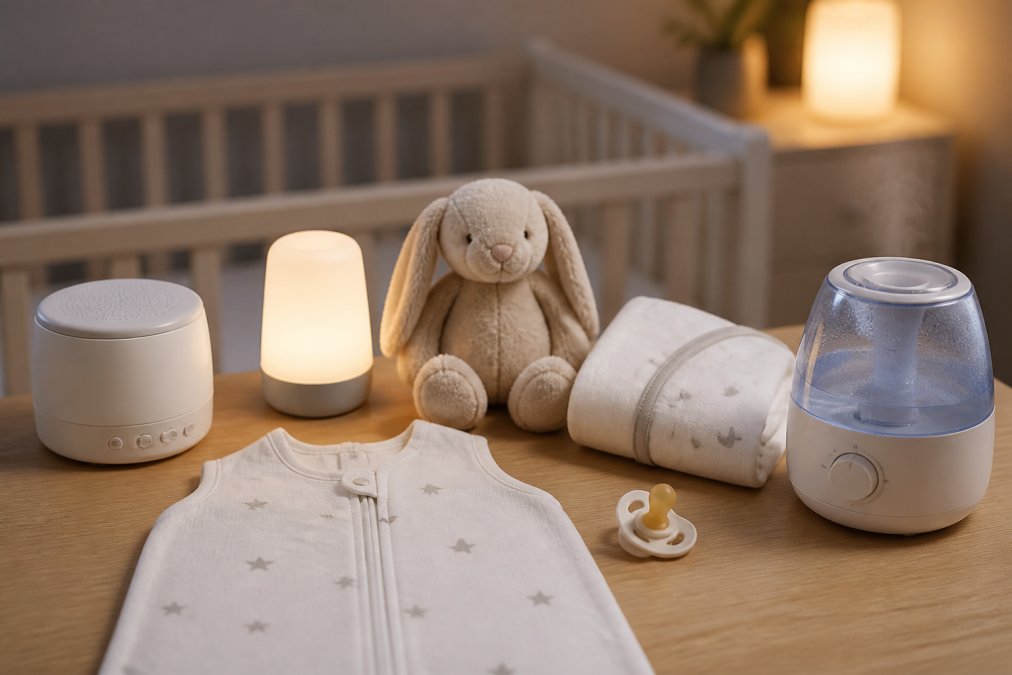
 listicle
Best Baby Sleep Aids for 2026: Safe Picks
Table of Contents
- Best Baby Sleep Aids for 2026: Our Top Picks
- Comparison Table: Top Sleep Aids at a Glance
- White Noise Machines and Sound Soothers
- Swaddles and Sleep Sacks for Safe Sleep
- Essential Sleep Products for Newborns
- Safe Infant Sleep Practices: What the Guidelines Say
- When to Start Sleep Training and How Sleep Aids Fit In
- Budget-Friendly vs. Premium Sleep Aids
- Frequently Asked Questions
Last Updated: September 6, 2026
Best Baby Sleep Aids for 2026: Our Top Picks
Finding the best baby sleep aids for 2026 isn't about chasing the trendiest gadget. It's about understanding what actually supports an infant's developing sleep-wake patterns while respecting official safety guidance. Lulloom offers a curated selection of products designed to enhance your lifestyle with quality and care. We focus on delivering exceptional value through thoughtfully chosen items that cater to your everyday needs. Experience the perfect blend of functionality and style as we bring you products that make a real difference in your daily routine.
How We Chose These Sleep Aids
Baby sleep aids fall into several categories, and the best choice depends on your baby's age and developmental stage. Our selection process prioritizes three factors: adherence to safe infant sleep practices, the quality of materials, and the ease of weaning your baby off the aid when the time comes.
We evaluated products against evidence-based recommendations from pediatric health organizations. A sleep aid should never compromise the safety of the sleep surface, should use breathable fabrics, and should not become a crutch that prevents your baby from developing self-soothing skills.
Comparison Table: Top Sleep Aids at a Glance
| Category | Best For | Age Range | Key Safety Feature | Weaning Difficulty |
|---|---|---|---|---|
| White Noise Machine | Blocking household noise | 0-12 months | Volume cap at 50 dB | Low |
| Swaddle | Newborn startle reflex | 0-3 months | Hip-safe design | Moderate |
| Sleep Sack | Transition after swaddling | 3-12+ months | No loose bedding | Low |
| Pacifier | SIDS risk reduction | 0-6 months | One-piece construction | Moderate |
| Night Light | Bedtime routine cues | 6+ months | Warm, dim output | Low |
White Noise Machines and Sound Soothers
White noise machines are among the most effective baby sleep aids for 2026 because they mask sudden household sounds that jolt babies out of deep sleep. But the device you choose matters less than how you use it. The sound should be continuous, placed at least a meter from the crib, and set to a volume no louder than a gentle shower. If you can hear the machine clearly from outside the nursery door, it's too loud.
Sound soothers mimic the constant auditory environment of the womb, helping babies transition between sleep cycles without fully waking. This is why fan-based white noise is generally more effective than nature sounds, which have pauses that can cue a light-sleeping baby to wake.
Choosing the Right Type of Sound
There are three main categories of sound soothers: mechanical fan-based machines produce true analog white noise with no looping; digital looped machines offer more sounds and features like timers and app controls; and portable travel soothers are excellent for on-the-go naps but produce a thinner sound.
For newborns, a steady, low-frequency sound like true white noise or pink noise (which is slightly deeper and less harsh) tends to be most soothing. For older infants, a gentle lullaby or heartbeat sound can become a powerful sleep cue, but music with a melody can be more distracting than blocking.
Volume, Placement, and Safety
Pediatric audiology guidelines recommend keeping any sound machine at or below 50 decibels, roughly the level of a quiet conversation (aap.org). To test this, use a decibel meter app at your baby's ear height. The machine should never sit on the crib rail or within arm's reach; a shelf or dresser at least one meter (three feet) from the crib is ideal, and this distance also helps with weaning later.
A Note on Sound Preferences
Every baby is different. If you're unsure where to start, the "shush" sound is the most biologically familiar to a newborn. As your baby grows, you can experiment with different sound profiles, but avoid switching sounds frequently, consistency is what turns a sound into a reliable sleep cue.
Swaddles and Sleep Sacks for Safe Sleep
A swaddle is one of the most powerful sleep aids for newborns because it prevents the startle reflex (the Moro reflex) from waking them. However, swaddling is only safe until your baby shows signs of rolling over, typically around 8-12 weeks, when you must transition to a sleep sack to avoid a serious suffocation risk.
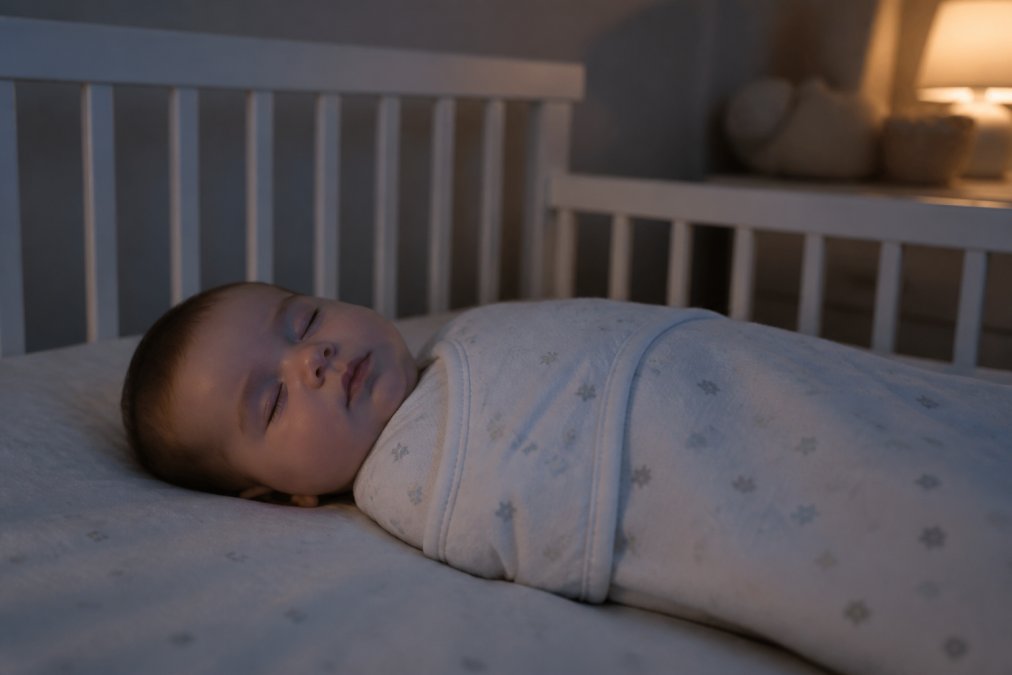
Sleep sacks serve as wearable blankets that keep your baby warm without the hazard of loose bedding. Prioritize breathable fabrics like organic cotton or muslin to prevent overheating, a known SIDS risk factor. The sack should fit snugly around the chest but allow full hip movement to prevent hip dysplasia.
Essential Sleep Products for Newborns
Beyond the headline items, several nursery essentials contribute to a complete sleep system. A firm, flat mattress with a fitted sheet is non-negotiable, and the crib should contain nothing else: no bumpers, no pillows, no stuffed animals. Pacifier use is recommended at sleep times because it is associated with a reduced risk of SIDS, though you should never force a baby to take one. A dim, warm night light supports the circadian rhythm, and the room should be cool, around 68-72°F (20-22°C), with light layers of clothing.
Safe Infant Sleep Practices: What the Guidelines Say
The foundation of any sleep strategy is the safe sleep environment. The American Academy of Pediatrics guidelines are clear: babies should sleep on their backs, on a firm surface, in a crib or bassinet in the same room as their parents for at least the first six months.
AAP safe sleep guidelines emphasize that the sleep surface should be bare and firm. This means your chosen baby sleep aids must work within that constraint. A white noise machine sits on a shelf, a sleep sack replaces a blanket, and a pacifier is the only item that goes near the baby's mouth. Products that attach to the crib rails or claim to position a baby's head are not recommended, as they introduce risks without proven benefits.
Sleep positioners and wedges are explicitly discouraged. If a product claims to prevent flat head syndrome or reflux by positioning your baby, it falls outside safe sleep guidance. The safest approach is a bare crib, a fitted sheet, and a baby in a sleep sack appropriate for the room temperature.
When to Start Sleep Training and How Sleep Aids Fit In
Sleep training is a separate process from choosing sleep aids, but the two intersect. Most pediatric experts suggest formal sleep training can begin around 4-6 months, once a baby can self-soothe and no longer needs nighttime feeds. Every sleep aid you introduce has the potential to become a sleep association your baby cannot fall asleep without. The question isn't whether you'll need to wean; it's whether you have a plan for doing so.
The Dependency Trap: How Sleep Aids Become Sleep Crutches
A sleep aid becomes a sleep crutch when your baby requires your active intervention to recreate it in the middle of the night. For example, your baby may cry until you reinsert a fallen pacifier 5-10 times per night, need rocking to a deep sleep before being placed in the crib, or wake the moment the white noise machine shuts off. A truly effective sleep aid works passively, it creates a consistent environment without requiring you to be present. White noise and sleep sacks fall into this category; active aids like rocking, feeding to sleep, or constant pacifier replacement are the ones that become problems.
A Practical Weaning Sequence for Common Sleep Aids
If you've already created a dependency, don't panic. Weaning is gradual, and most babies adapt within 1-2 weeks if you make changes slowly.
Weaning off the swaddle: This is usually the first transition, around 8-12 weeks when your baby starts showing signs of rolling. Don't go cold turkey. Swaddle with one arm out for 2-3 nights, then both arms out for another 2-3 nights, before moving to a sleep sack.
Weaning off the pacifier: The "cold turkey at bedtime" approach works only if your baby is over 6 months and can find their own pacifier in the crib. If they can't, start by removing it after they've fallen asleep. For infants under 12 months, simple removal is usually less traumatic than a prolonged negotiation.
Weaning off the sound machine: This is the easiest dependency to break. Over 5-7 nights, gradually reduce the volume. Once barely audible, move the machine further from the crib every few nights until it's out of the room entirely.
Weaning off rocking or feeding to sleep: This is the hardest dependency to break because it involves your active presence. The most effective method is "fading": each night, rock or feed your baby until drowsy but not fully asleep, then place them in the crib, reducing the time by a few minutes each night.
The Role of Sleep Aids During Sleep Training
During formal sleep training (whether you use the Ferber method, the chair method, or a no-cry approach), your sleep aids should remain constant. Don't introduce a new white noise machine or switch from a swaddle to a sleep sack the same week you start sleep training, isolate one variable at a time.
When Weaning Goes Wrong: Troubleshooting Common Setbacks
Even with a gradual approach, you'll hit bumps. The 4-month sleep regression is the worst time to wean any sleep aid, wait until it passes (usually 2-6 weeks). Pause weaning during any illness, fever, or severe teething. And expect resistance for 2-3 nights before your baby accepts a weaning step; if there's no improvement by night 4-5, revert and try again in 2-3 weeks.
A practical weaning sequence: first, transition from a swaddle to a sleep sack. Next, reduce the white noise volume over several nights. Finally, move the machine further from the crib. Each step should be small and gradual, taking several days between changes.
Budget-Friendly vs. Premium Sleep Aids
The gap between budget-friendly and premium baby sleep aids is often about materials and longevity, not core function. A basic white noise machine produces the same sound as a premium model, but the premium version may offer better sound quality, a volume limiter, and a longer lifespan. For items that touch your baby's skin for 12+ hours a day, like sleep sacks, investing in higher-quality, breathable fabrics is worthwhile. For electronic items, look for safety certifications and features like automatic shut-off or volume caps.
When you shop with a curated retailer like Lulloom, you're paying for the curation itself: the assurance that every product has been thoughtfully chosen to enhance your lifestyle with quality and care. That convenience has real value for exhausted parents who are already overwhelmed with shopping decisions. The Consumer Product Safety Commission guidance on nursery products is a useful reference for verifying that any product you buy, from any retailer, meets current federal safety standards.
No product replaces a consistent bedtime routine and a safe sleep environment. The best baby sleep aids for 2026 are the ones that fade into the background, creating a calm, predictable space where your baby can learn to fall asleep. Start with the safety fundamentals, add aids that address your specific challenge, and plan your weaning strategy from day one. For a curated selection of products designed to enhance your lifestyle with quality and care, explore what Lulloom has curated for your family.
Frequently Asked Questions
Are white noise machines safe for newborns?
Yes, when used correctly. The American Academy of Pediatrics recommends keeping the volume at or below 50 decibels, which is about the volume of a quiet conversation. Place the machine at least 200 cm (7 feet) from the crib to protect your baby's hearing. Choose a machine with a volume limit feature and avoid placing it directly on the crib rail. Used this way, white noise is a safe and effective part of a healthy bedtime routine.
When should I start using a sleep sack instead of a swaddle?
Stop swaddling as soon as your baby shows signs of rolling over, which can happen as early as 2 months old. A rolled baby in a swaddle is a serious SIDS risk. Transition to a sleep sack at this point to keep your baby warm without loose blankets in the crib. Sleep sacks are a safe alternative that allows for hip development and free arm movement while maintaining a safe sleep environment.
What is the 5-3-3 rule for baby sleep?
The 5-3-3 rule is a simple sleep schedule framework for older infants and toddlers. It refers to the number of hours they should sleep during the day and night. For example, a baby might nap for a total of 2 hours during the day, broken into two naps (one of 1 hour and one of 1 hour), and be expected to sleep for 11 hours at night without feeding. It is not a medical guideline but a pattern many parents find helpful for structuring their day. Always prioritize your baby's individual cues over a rigid schedule.
Do baby sleep aids actually work, or are they just a trend?
Evidence-based sleep aids like white noise machines and sleep sacks work by recreating the comforting conditions of the womb and promoting a safe sleep environment. They address common sleep associations and help babies settle. However, no device replaces a consistent bedtime routine. Sleep aids are most effective when used as part of a predictable routine that signals to your baby that it is time to sleep. Products that make grand promises of sleeping through the night are often less effective than simple, consistent habits.